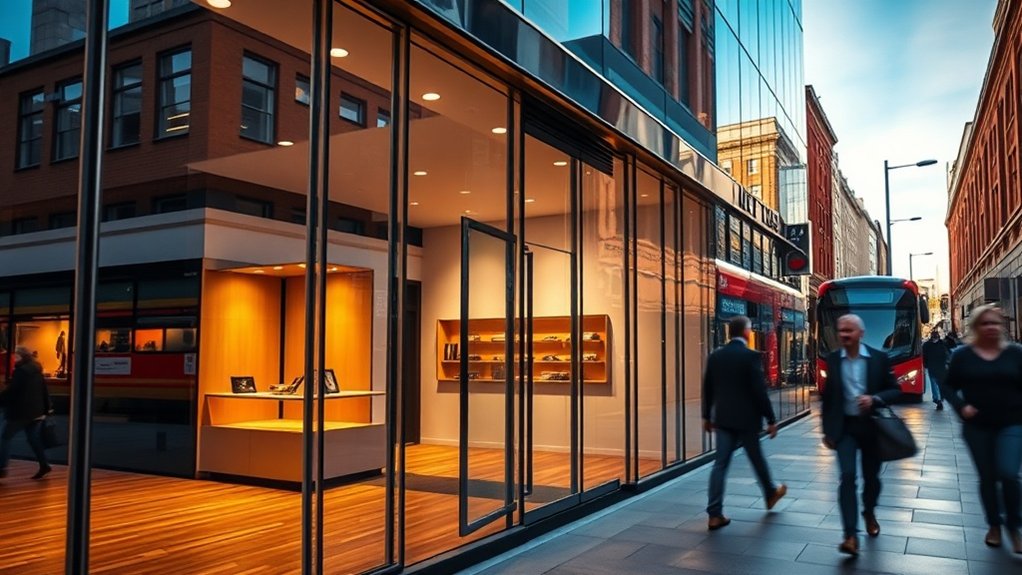
Shop front glazing in Chancery Lane demands more than standard glass: you’ll need systems that meet local conservation and planning rules , resist wind and driving rain, and deliver secure, thermally efficient performance. You’ll choose between laminated, toughened or insulated glass with solar-control or low‑E coatings, set in aluminium, steel or timber frames that respect streetscape character. Integrated branding, LED displays and high‑security details complete the solution, and the following sections show how to get this right.
Key insights
- Specialists in Chancery Lane design, supply, and install shop front glazing that meets local planning, conservation area, and building regulations.
- Options include laminated safety, toughened security, and insulated glass units with low‑E or solar-control coatings for thermal, acoustic, and impact performance.
- Aluminium, steel, timber, and hybrid frames are available, balancing slim sightlines, heritage compatibility, durability, and security requirements.
- Services cover branding, etched logos, colour films, and integrated LED lightboxes, digital panels, and illuminated signage for high-impact retail frontages.
- Providers offer full lifecycle support: survey, structural checks, installation, weatherproofing, and maintenance or replacement of damaged or outdated glazing systems.
Why Shop Front Glazing Matters in Chancery Lane
Whether you’re targeting passing trade on the high street or operating in an industrial estate, high‑performance shop front glazing is critical to how your Chancery Lane premises functions and performs. You’re not just installing glass; you’re engineering a high‑visibility, thermally efficient interface between your brand and the street.
In a dense, mixed‑use city, advanced glazing helps you optimise daylight, reduce glare, and stabilise internal temperatures, cutting energy spend while enhancing comfort. It also underpins security, deterring opportunistic crime and protecting assets without making the frontage look fortified.
Well‑specified glazing elevates perceived quality and supports premium customer service by making interiors feel open, accessible, and safe. With the right maintenance tips, you’ll extend lifecycle performance, minimise downtime, and protect your capital investment.
What Shop Front Glazing Involves: Glass Types and Systems
Once you move beyond basic shop windows, shop front glazing becomes a coordinated system of glass types, framing, and hardware engineered to meet performance, branding, and compliance targets. You’re not just choosing panes; you’re specifying laminated safety glass, toughened security glass, or insulated glass units to control impact resistance, acoustics, and thermal performance.
You’ll also define coatings and interlayers that drive glass aesthetics and energy behaviour: low‑E, solar control, fritted, or digitally printed glass to communicate brand while managing glare and heat gain. Advanced glazing innovations—switchable privacy glass, bird‑safe patterns, or integrated LEDs—let you future‑proof the frontage and differentiate on a busy Chancery Lane high street. Finally, you coordinate door systems, thresholds, and ironmongery to keep access, durability, and compliance aligned.
Aluminium vs Steel vs Timber Shop Front Frames
Beyond the glass specification, your choice of aluminium, steel, or timber framing will dictate how the shop front performs under real‑world loading , weathering, security threats, and brand expectations. Aluminium gives you slim sightlines, robust powder‑coated finishes, and easy integration of smart Lighting options within mullions and transoms. Steel delivers maximum structural capacity and ultra‑slender profiles, ideal for wide spans and high‑end minimalist branding. Timber lets you align with conservation constraints and historical styles while embedding modern performance.
You’ll typically compare:
- Aluminium: best all‑rounder for cost, weight, and adaptability.
- Steel: superior spanning ability and architectural impact.
- Timber: unmatched heritage character and tactile warmth.
- Hybrid systems: combine aluminium externals with timber internals for durability and premium aesthetics.
Security Features for Chancery Lane Shop Front Glazing
Because Chancery Lane retailers operate in a high‑footfall, sometimes high‑risk urban environment, your shop front glazing specification has to function as a security system as much as a display window. You’ll typically combine laminated safety glass with interlayers engineered for anti‑shatter and anti‑penetration performance, aligned with standards such as EN 356.
Specify thermally‑toughened laminated units within robust aluminium or steel framing, anchored by continuous glazing channels and security‑rated fixing points . Integrate locking bead profiles, anti‑jemmy glazing bars, and under‑sill reinforcement to resist prying and ram‑raid attempts.
Decorative films and tinting options aren’t just aesthetic; they provide privacy, control sightlines to high‑value stock, and help mask security blinds or internal grilles, preserving a clean, contemporary façade while elevating risk‑based protection.
Insulation, Noise and Natural Light in Shop Fronts
Security performance is only one part of a well‑engineered Chancery Lane shop front; you also need glazing that manages heat loss, street noise, and daylight effectively. You’re balancing comfort, energy performance, and visual clarity on a busy urban streetscape.
Modern insulated glass units with low‑e coatings, warm‑edge spacers, and argon fills cut U‑values and stabilise internal temperatures. Laminated acoustic interlayers then attenuate traffic noise without sacrificing transparency. To fine‑tune solar gain and glare, you can combine selective coatings with intelligent window tinting and solar control films.
Key specification levers include:
- Glass thickness build‑ups and cavity depths
- Acoustic interlayer types and lamination sequences
- Spectrally selective solar control coatings and films
- Frame thermals, gaskets, and airtight installation details
Shop Front Glazing Design Ideas to Showcase Your Brand
You can use shop front glazing as an active branding tool by integrating custom glass treatments , etched logos, and colour films that align with your visual identity. By pairing this with engineered illuminated displays and signage, you guarantee your brand remains visible and legible in all lighting conditions while meeting local regulations. Let’s look at how specific glass configurations, lighting systems, and mounting methods can work together to showcase your brand with maximum impact on Chancery Lane’s high streets.
Branding Through Glass Design
Thoughtful glass design turns your shop front into a high-impact branding asset, not just a transparent barrier. By engineering the façade as a visual identity tool , you hard-wire your brand’s geometry, colour logic, and material language into the streetscape. Strategic glass patterns and tinting options let you control privacy, solar gain, and sightlines while embedding brand codes directly into the substrate.
You can integrate branding through:
- Etched or fritted glass patterns that echo your logo, iconography, or typography
- Dual-purpose tinting options that match brand colours while optimising glare and UV control
- Laminated interlayers printed with gradients, motifs, or textures specific to your visual identity
- Precision-applied manifestations that maintain compliance while delivering recognisable brand signatures
Illuminated Displays And Signage
When integrated directly into the glazing, illuminated displays and signage turn the shop front into a high-performance advertising surface that works long after trading hours. You can embed LED lightboxes, edge-lit logos, and digital panels within insulated glass units, maintaining thermal performance while maximising visual impact.
Specify low-energy LEDs with uniform luminance control to avoid hotspots and glare. Integrate wiring channels within mullions and transoms so you preserve clean sightlines and long-term service access. For Chancery Lane’s variable climate, prioritise sealed systems with tested weather resilience, IP-rated fittings, and effective heat dissipation.
You’ll also enhance aesthetic appeal by synchronising colour temperatures with your interior lighting and brand palette, creating a seamless day-to-night identity that’s both visually striking and operationally efficient.
Chancery Lane Planning Rules and Building Regs for Shop Fronts
How do Chancery Lane’s planning rules and building regulations shape what’s possible for a new shop front glazing design? You can’t treat the façade as a blank canvas; you’ve got to align visual ambition with local policy, especially in conservation areas and primary retail frontages. The goal is to maximise customer engagement while meeting strict criteria on proportions, transparency, and materials, and ensuring long‑term weather resilience for the building envelope.
You’ll typically need to resolve:
- Alignment with existing streetscape, cornice lines, and stall‑riser heights
- Glazing ratios that preserve active frontages and sightlines into the unit
- Structural performance under wind loading and driving rain exposure
- Thermal performance, drainage, and junction detailing that prevent cold bridging and water ingress
Safety Glass and Accessibility Standards for Shop Front Glazing
Although the shop front is primarily a marketing tool, Chancery Lane’s building control and UK standards treat your glazing first as a safety‑critical element and an access interface. You must specify toughened or laminated safety glass in all critical locations, with impact performance to BS EN 12600 and compliance with Part K.
For accessibility, Part M demands clear visibility, safe thresholds, and inclusive operation. You’ll need manifestation bands at prescribed sightlines; here, decorative frosting and tinting options become functional technologies, not just aesthetics. Use high‑contrast films to define doors, screens, and sidelights for visually impaired users while controlling solar gain.
Integrate low‑level glazing protection, anti‑finger‑trap door designs, and hardware with appropriate opening forces to create a compliant, future‑proof Chancery Lane shop front.
Shop Front Glazing Costs in Chancery Lane: Budget and Price Factors
Costing a new shop front glazing system in Chancery Lane means balancing glass specification , framing type, security level, and installation complexity against a realistic budget. You’re not just buying glass; you’re investing in thermal performance, security resilience, and brand presence aligned with local planning constraints.
Key price drivers you should evaluate:
- Glass technology – laminated, toughened, low‑iron, or solar-control coatings each shift cost, clarity, and energy performance.
- Framing systems – thermally broken aluminium, slimline steel, or hybrid systems alter structural spans, aesthetics, and interface costs.
- Design integration – bespoke color schemes, branding films, and integrated LED channels add value but increase per‑square‑metre rates.
- Contextual factors – corner plots, restricted access, and historical preservation requirements in Chancery Lane’s conservation areas can require custom engineering and approvals, impacting your final budget.
Shop Front Glazing Installation: Timeline and What to Expect
When you plan your shop front glazing in Chancery Lane, you need a clear understanding of the installation timeline from initial site assessment through to final sign-off. You’ll see how a structured pre-installation survey, a phased installation process, and coordinated trades keep disruption to your trading hours to a minimum. Next, you’ll learn what to expect at each stage, including key checkpoints, quality controls, and typical durations for post-installation inspections.
Pre-Installation Site Assessment
Before a single frame is ordered or a pane is cut, a thorough pre-installation site assessment defines what’s structurally feasible and how smoothly your shop front glazing project in Chancery Lane will run. You’re not just checking dimensions; you’re validating load paths, interface details, and compliance with local regulations , especially around historical architecture and streetscape consistency.
A robust assessment typically covers:
- Structural substrate analysis: masonry condition, steelwork alignment, tolerance checks.
- Façade context: neighboring sightlines, heritage constraints, and branding visibility.
- Performance criteria: thermal targets, acoustic needs, security level, and environmental impact.
- Service integration: heating runs, cabling, sensors, and automatic door coordination.
Installation Process Breakdown
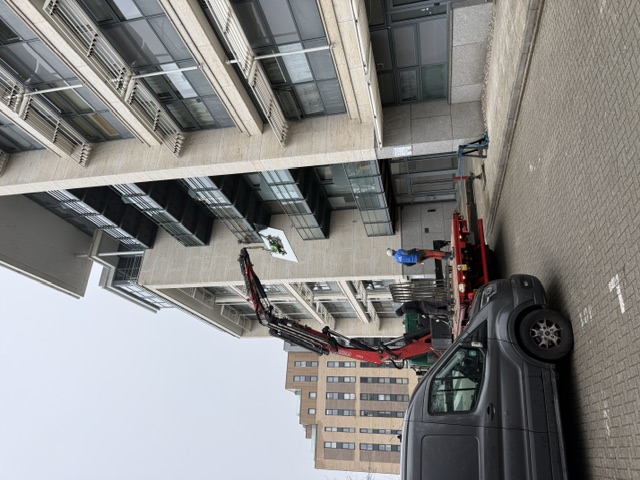
Once your site assessment’s complete and specifications are locked in, the installation phase for shop front glazing in Chancery Lane follows a tightly sequenced programme that minimises downtime and protects the public environment. You’ll see hoarding and safety barriers set out first, with existing façades deglazed, frames extracted, and fixings exposed for structural verification.
Next, installers position and anchor new framing, integrating drainage, thermal breaks, and tolerance for future branding, color schemes, and seasonal decorations. Glazing units arrive just-in-time , are mechanically lifted, seated on setting blocks, then secured with pressure plates or structural silicone.
Finally, operable elements, security hardware, and sealants go in, with interfaces to cladding, flooring, and signage aligned for a clean, future-ready frontage.
Post-Installation Checks Timeline
Although the glass is in and the frontage looks complete, a structured sequence of post-installation checks now verifies that your new shop front glazing in Chancery Lane performs as designed and is safe to occupy. Within the first 24–72 hours, your installer should validate fixing integrity, sealant curing, and alignment tolerances, then review performance and aesthetics against specification , including color options and hardware finishes.
Expect your contractor to:
- Confirm glass type, edge clearances, and loading compliance.
- Test door operation, access control, and weather-tightness under real-use conditions.
- Inspect silicone lines, gaskets, drainage paths, and protection against thermal stress.
- Supply maintenance tips, cleaning protocols, and a documented inspection schedule.
These checks close the loop between design intent, on-site execution, and long-term façade resilience.
Maintaining, Repairing and Replacing Shop Front Glazing
Because your shop front is a critical structural and commercial asset, you need a clear strategy for maintaining, repairing, and, when necessary, replacing its glazing to keep it safe, compliant, and visually sharp. Start with a maintenance schedule : inspect seals, fixings, and impact zones quarterly, and document chips, scratches, or misalignment.
Use advanced glass coatings, window tinting, and decorative etching not just for aesthetics, but to control solar gain, enhance privacy, and protect branding from UV degradation. When you detect edge damage, delamination, or recurring condensation, prioritise targeted repairs before they compromise structural integrity.
Plan for end‑of‑life replacement using higher-spec laminated or toughened systems, integrating thermal performance, security ratings, and future signage flexibility from the outset.
How to Choose a Shop Front Glazing Company in Chancery Lane
When you’re selecting a shop front glazing company in Chancery Lane, you need to prioritise proven local experience with high-footfall retail environments and current building regulations. You should compare glazing systems, glass specifications, and safety performance to guarantee they meet British Standards and your insurance requirements. At the same time, you’ll want to evaluate design capability and total project cost so you get a façade that aligns with your brand, budget, and long-term operational needs.
Assessing Local Experience
How can you quickly judge whether a glazing contractor truly understands Chancery Lane’s retail environment or is just “working in the area”? You look for proof of embedded local experience, not generic claims.
Ask how they’ve optimised visibility and security for independent retailers, galleries, and units collaborating with local artisans or hosting community events. Genuine specialists reference specific streets, footfall patterns, and council planning nuances.
Evaluate their track record:
- Completed shop fronts in key districts like the Lincoln's Inn, Gray's Inn, and Farringdon.
- Case studies detailing out-of-hours installs to minimise trading disruption.
- Familiarity with local planners, heritage constraints, and Business Improvement District priorities.
- Long-term maintenance relationships with Chancery Lane brands, backed by performance data.
This evidences a contractor who designs glazing around Chancery Lane’s commercial realities, not abstractions.
Comparing Materials And Safety
Next, scrutinise how each contractor specifies glass types , framing systems, and safety measures, because your shop front must simultaneously sell your brand and protect it. Ask whether they recommend laminated safety glass, toughened glass, or hybrid systems, and why. You’re looking for quantified impact resistance, certified break‑in performance, and compliance with BS 6262 and EN safety standards.
Probe how they balance material durability with aesthetic appeal. Aluminium, thermally broken steel, and advanced composites all deliver different lifespans, maintenance profiles, and structural tolerances. Insist on documented wind‑load calculations, edge‑cover details, and hardware testing data.
Finally, challenge them on security innovation: anti‑bandit glazing, secure fixing methods, and integration with access control and sensors, not just generic “toughened glass” claims.
Evaluating Design And Cost
Having tested each contractor’s grasp of materials and safety, you now need to see whether their design proposals and costings stand up to commercial reality. Ask each firm to model options that align daylight performance , branding, and lifecycle cost. You’re not buying glass; you’re buying an interface between street traffic and revenue.
Interrogate how they integrate contemporary color schemes with local guidelines for historical preservation , particularly in Chancery Lane’s conservation areas. Robust bidders will provide clear, itemised quotations, not generic allowances.
Evaluate whether they:
- Quantify energy savings from glass specification and framing systems
- Detail hardware, manifests, and installation sequencing in writing
- Demonstrate planning expertise for conservation and historical preservation constraints
- Offer value-engineered alternatives that protect sightlines and brand-led color schemes
Frequently Asked Questions
How Does Shop Front Glazing Affect Business Insurance Premiums in Chancery Lane?
It can lower your premiums when insurers see you’ve installed high-spec glazing . You reduce perceived exposure to break-ins, injury, and weather losses, so underwriters adjust risk assessment models in your favor. If the glass is laminated, toughened, and professionally certified, you’re more likely to gain insurance discounts. You should document compliance with security standards and present performance data to your broker to negotiate more favorable commercial terms.
Can I Keep My Shop Open During Glazing Replacement or Major Repairs?
You usually can’t trade safely while glass giants fall. Imagine your shop as a live construction node : during glazing replacement, you’ll schedule Temporary closures or tightly controlled partial shutdowns. You’ll enforce strict Safety precautions—barriers, exclusion zones, PPE, and phased access—coordinated via a method statement and risk assessment. Collaborate with installers to sequence works off‑peak, use modular systems, and minimize downtime while remaining fully compliant with H&S and insurer requirements.
Are There Eco-Friendly or Recycled Glazing Options Suitable for Chancery Lane Shop Fronts?
Yes, you’ve got viable eco options. You can specify high-performance units using Recycled glass content , low-iron where clarity matters, combined with eco friendly coatings that cut solar gain and improve U-values. You’ll also integrate warm-edge spacers, argon fill, and thermally broken framing. These systems reduce operational carbon, support BREEAM-style targets, and maintain brand visibility, while keeping performance, compliance, and lifecycle costs aligned with innovative sustainability goals.
How Often Should Shop Front Glazing Be Professionally Inspected for Safety Issues?
You should schedule professional inspections at least once a year, and every six months if you’ve high footfall or heavy door use. You might think toughened glass durability makes that excessive, but micro-fractures, failed seals, and hardware fatigue aren’t always visible. A qualified glazing engineer will verify compliance with current safety standards, check impact resistance, assess fixing integrity, and recommend innovative upgrade options —like smarter interlayers or laminated systems—for proactive risk management.
What Are Common Mistakes Businesses Make When First Specifying Shop Front Glazing?
You often under-spec impact resistance, over-prioritize design aesthetics, and ignore long-term material durability. You might skip thermal performance modeling , misjudge loading from doors or large panes, and overlook edge clearances for movement. You also may neglect acoustic needs, security laminates, and compatibility with framing systems. To avoid these, use performance-based specifications, demand validated test data, and integrate glazing engineers early in the concept phase.
Summary
When you invest in the right shop front glazing in Chancery Lane, you’re not just upgrading glass – you’re optimising security, efficiency and brand impact in one solution. By choosing suitable glass types, robust framing, proven security hardware and professional installation, you minimise risk and lifecycle costs. Maintain it properly, and you’ll extend performance and appearance. Isn’t it time your shop front worked as hard as the rest of your business?