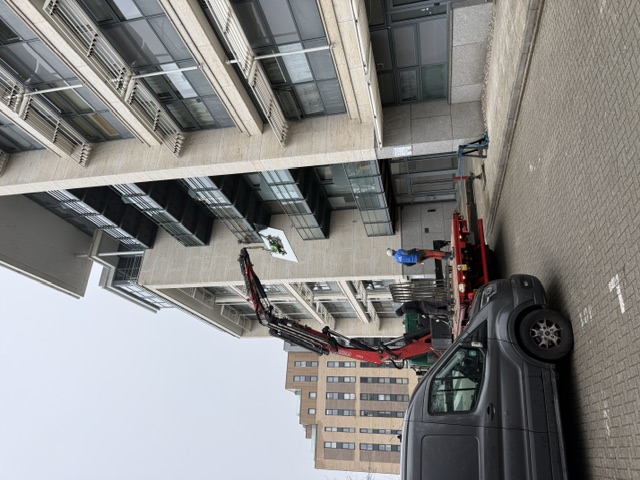
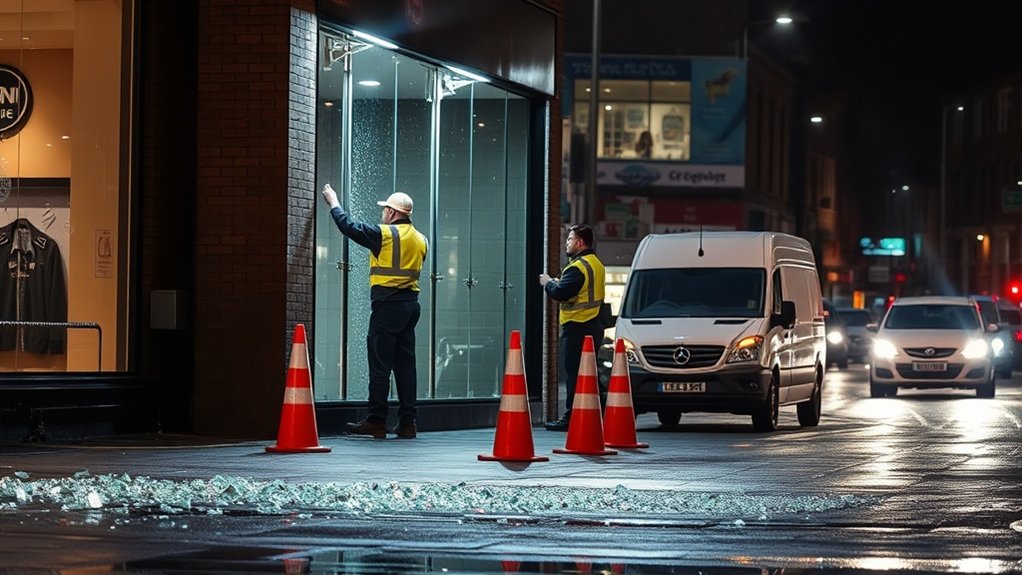
If you need emergency glazing in Gray's Inn, you can get a 24/7 rapid response to secure smashed windows, doors, or shopfronts within hours. Technicians board up, make the area safe, assess structural risks, and take precise measurements for compliant replacement glass. They’ll advise on options like laminated, toughened, or security glazing to restore safety, insulation, and appearance while supporting insurance documentation. Stay here to see what’s included, costs, and how to stay safe while you wait.
Key insights
- 24/7 emergency glazing in Gray's Inn secures broken windows fast with on-site boarding-up and precise measurements for replacement glass.
- Technicians assess hazards, isolate the area, remove loose shards, and stabilize frames to keep occupants and the public safe.
- Options range from temporary boarding to standard, laminated, toughened, and advanced security or energy-efficient glazing systems.
- Transparent pricing should itemize call-out, labour, glass type, materials, disposal, and follow-up fitting costs.
- Detailed documentation with photos, measurements, and incident notes supports insurance claims and demonstrates safety and compliance.
Emergency Glazing Services in Gray's Inn: What’s Included
When a pane shatters without warning, emergency glazing services in Gray's Inn deliver rapid, on‑site protection that restores safety and secures your property. You get immediate boarding‑up, precision measurement , and specification of replacement glass aligned with current performance standards and local regulations.
Technicians stabilise frames, assess structural load paths, and guarantee temporary materials don’t compromise insulation or security systems. They document damage, support digital reporting, and integrate with smart locks or monitored alarms where installed.
You’re offered like‑for‑like replacements or upgraded units that improve thermal performance and acoustic control while preserving glass aesthetics and existing decorative designs. Services typically include debris removal, edge sealing, and moisture‑control measures, so the opening’s protected and ready for fabrication of the final, engineered glazing solution.
When to Call an Emergency Glazier in Gray's Inn
When glass fails, you need to know how to identify a genuine emergency quickly so you can act before the situation escalates. You’ll assess immediate safety risks and hazards such as exposed edges, falling fragments, unsecured access points, and environmental exposure. In the next section, you’ll see when these factors make a repair time‑critical and justify calling an emergency glazier in Gray's Inn immediately.
Identifying Genuine Glass Emergencies
Although not every crack in a pane demands an immediate call‑out, recognising a genuine glass emergency in Gray's Inn is critical for safety, security, and compliance with building standards. You need to evaluate the failure mode of the glazing, not just its appearance. Focus on how fast the damage is progressing and how it affects enclosure integrity and access control.
- If damage compromises structural Glass durability (large star breaks, edge‑to‑edge cracks), treat it as urgent.
- If the opening’s accessible from street level, prioritise a rapid Emergency assessment.
- If glass supports hardware (doors, shopfronts, balustrades) and no longer holds fixings securely, call immediately.
- If temperature or wind loads could propagate the crack quickly, don’t wait; get an emergency glazier on site.
Safety Risks And Hazards
Recognising a genuine glass emergency is only the first step; you also need to understand the specific safety risks that demand an immediate call to an emergency glazier in Gray's Inn. Any fractured panel , however visually minor, can fail suddenly under wind load, vibration, or temperature change, projecting razor‑sharp shards into occupied spaces.
You’re especially vulnerable where glass aesthetics drive design: large shopfronts, frameless doors, balustrades, rooflights, and decorative panes. Cracks here compromise structural integrity, impact resistance, and containment of people or assets.
Internally, damaged partitions and glazed doors create high‑risk laceration paths along normal circulation routes. Externally, broken units weaken building security and can shed fragments onto pavements or parking areas. When you see instability, bowing, or loose fragments, treat it as a live hazard and call an emergency glazier immediately.
Time-Critical Repair Situations
How do you know a broken pane can’t wait until normal working hours? You assess risk, exposure, and impact on your building’s performance. When structural glazing , security glass, or bespoke glass artistry fails, you need rapid intervention that protects both people and your creative design intent.
Call an emergency glazier in Gray's Inn immediately if:
- The break compromises security, allowing easy access or making locks, sensors, or smart façades ineffective.
- Weather, debris, or temperature loss can quickly damage interiors, equipment, or stock.
- Critical operations—retail fronts, healthcare, data rooms, or production lines—depend on clear, safe visibility.
- Specialist installations, such as load‑bearing or laminated feature glass, show cracking, bowing, or delamination that could propagate fast.
What Happens During an Emergency Glazing Call-Out
When a pane shatters and you request an emergency glazing call-out, a rapid, structured process begins to secure your property and restore safety. You’re immediately asked targeted questions: glass type, framing system, security risks, occupancy, and any special glass design or aesthetic appeal requirements, so the response team can select compatible materials and hardware.
Technicians deploy with pre-calibrated tools, safety PPE, and glazing consumables. On arrival, they run a fast hazard assessment, isolate the failure zone, and clear loose shards using controlled removal methods to prevent secondary breakage. They then survey frame integrity, identify impact points, and document everything for insurance and compliance. Throughout, they explain risks, outline technical options, and prioritise restoring a safe, weather‑tight, regulation‑compliant envelope.
Boarding Up vs Replacement Glass: How Your Property Is Secured
When glass fails, you need to understand how boarding up and replacement glazing protect you at different stages. We’ll assess your immediate safety priorities, then specify the right temporary security solution to stabilise and secure the opening. From there, we’ll help you choose long‑term glazing options that restore full protection, energy performance, and compliance with relevant standards.
Immediate Safety Priorities
In the first minutes after glass fails, your priority is to stabilise the opening and remove immediate hazards . You’re not choosing between glass aesthetics or decorative glazing yet; you’re preventing injury, weather ingress, and unauthorised access.
- Identify danger zones: isolate the area, reroute footfall, and protect critical assets, stock, or equipment.
- Manage broken glass: use controlled removal techniques, scoop not sweep where possible, and contain shards in rigid, clearly labelled containers.
- Secure the aperture : specify impact‑resistant boards or rapid‑fit safety glass, matched to load, span, and fixing substrates.
- Verify structural integrity: check frames, mullions, transoms, and nearby cladding for distortion or hidden cracking before any refinement.
Once these steps are complete, you’re ready to consider longer-term security and visual performance.
Temporary Security Solutions
Although the immediate hazards are under control, you now need a fast , engineered decision on how the opening is secured: robust boarding or temporary replacement glass. Boarding delivers impact resistance and visual deterrence; technicians anchor sheets into masonry or frames, eliminating weak fixing points and reducing pry-in risks. It’s ideal when you need overnight protection or complex measurements.
Temporary replacement glass, by contrast, restores transparency and basic insulation while maintaining security. Specialists select glass types based on glass durability, anticipated load, and exposure, then fit them with secure beading and high-spec sealants. In both options, they assess frame integrity, lock function, and potential Security upgrades, ensuring the compromised area isn’t just covered, but mechanically hardened against further intrusion.
Long-Term Glazing Choices
Once you’ve stabilised the opening with temporary boarding or glass, the next decision shapes how secure and efficient your property will be for years, not hours. You’re choosing between extended boarding and high‑performance replacement glazing that upgrades security, energy control, and glazing aesthetics in one move.
- Extended Boarding – Offers impact resistance, but it’s visually disruptive, thermally inefficient, and can signal vulnerability if left too long.
- Standard Replacement Glass – Restores appearance quickly, yet may underperform on glass durability and insulation.
- Laminated / Toughened Systems – Engineered interlayers and heat treatment deliver anti‑intrusion performance and improved safety.
- Advanced Glazing Packages – Low‑E coatings , acoustic layers, and security films integrate to optimise protection, comfort, and visual clarity.
Act fast: long-term glazing choices lock in your risk profile.
Emergency Glazing Costs in Gray's Inn: What to Expect
When you face a broken window or smashed shopfront, understanding emergency glazing costs in Gray's Inn helps you act fast without risking a costly mistake. You’re typically paying for rapid response, temporary securing, and a measured, engineered replacement that preserves structural integrity and glass aesthetics, including any decorative panes.
Expect call‑out charges to vary by time of day, access complexity, and glass type—laminated, toughened, acoustic, or security‑rated units all price differently. Larger spans, curved profiles, and bespoke coatings increase material and handling costs. Technicians should give you a clear, itemised quote: labour, materials, disposal, and follow‑up fitting.
Prioritise firms that use digital surveying, smart scheduling, and transparent pricing matrices so you can benchmark costs quickly and approve work with confidence.
Emergency Glazing, Insurance Claims, and Your Legal Duties
When glass fails, you must document the damage methodically for insurers while also meeting strict safety compliance duties. You’ll need clear photos, timestamps, incident notes, and installer reports that align with your policy terms and UK building regulations. Acting fast guarantees your emergency glazing work protects people on-site, preserves evidence, and keeps your claim legally robust.
Documenting Damage For Insurers
Even before glass is cleared from the floor, you should start documenting the damage as if an insurance assessor were standing beside you. Treat the site like a live dataset: every shard, frame distortion, and impact point is evidence that supports your claim and future upgrades in glass aesthetics and design trends.
- Capture wide‑angle and close‑up photos, plus short videos, timestamped and geotagged .
- Log each affected pane: dimensions, glass type, coatings, safety markings, and frame materials.
- Record cause indicators—tool marks, weather impact, entry points—using precise, neutral language.
- Compile invoices, emergency glazing reports, and temporary‑make safe notes into a single digital folder.
This disciplined record empowers your insurer to process the claim faster and fund smarter, design‑led replacements.
Meeting Safety Compliance Duties
Although smashed glass can feel like a design and insurance problem, it’s first a safety and legal issue that you’re duty‑bound to control. You must secure the site, block access, and eliminate sharp‑edge and falling‑glass risks in line with Workplace (Health, Safety and Welfare) and Building Regulations.
Emergency glazing isn’t just temporary protection; it’s evidence that you’ve acted with due diligence. A competent glazier will specify compliant safety glass, reference critical locations, and document decisions.
Ask them to log impact ratings, glass patterns, fixing methods, and timings, then integrate this with your incident report and CCTV.
How to Choose a Reliable Emergency Glazing Company in Gray's Inn
Because broken glass exposes your property to immediate security and safety risks, you must choose an emergency glazing company in Gray's Inn that’s properly accredited, fully insured, and capable of attending site 24/7 with the correct glass and equipment. You’re not just buying a repair; you’re buying continuity of operations and protection of brand-critical glass aesthetics and decorative glazing.
- Verify industry accreditations (e.g., FENSA, CHAS), public liability insurance, and DBS-checked engineers.
- Confirm genuine 24/7 response, defined ETA windows, GPS-tracked fleets , and real-time job reporting.
- Assess technical capability: laminated, toughened, fire-rated, security, and smart glazing, plus on-vehicle stock.
- Demand digital documentation: risk assessments, method statements, before/after imaging, and compliance certificates.
Common Causes of Broken Glass in Gray's Inn (And How Glazing Helps)
Once you know how to choose the right emergency glazing company in Gray's Inn, you can tackle the specific risks that most often shatter glass across the city. You’re mainly facing impact loads from forced entry, thermal stress from rapid temperature swings, and vibration from heavy traffic or industrial activity. Older panes and poor-quality glazing materials fail first under these conditions.
When glass breaks , you need fast, specification‑driven glass repair. Technicians should assess edge damage, frame distortion, and load paths before recommending laminated, toughened, or double‑glazed units. By upgrading glazing materials, you increase resistance to blunt force, reduce spontaneous thermal fracture, and improve acoustic damping. Smart choices here don’t just restore your envelope; they actively re‑engineer it to perform better under Gray's Inn’s real‑world stresses.
Safety Tips While You Wait for the Emergency Glazier
While you’re waiting for the emergency glazier to arrive, your priority is to stabilise the area and control the hazards created by broken glass. Think of this as a short, critical safety protocol before the professionals lock everything down.
- Isolate the zone: keep people, pets, and vehicles away. Use furniture or tape to create a visible exclusion perimeter .
- Protect yourself: wear shoes with solid soles and, if available, cut‑resistant gloves and eye protection before handling any fragments.
- Contain debris: gently sweep shards into a rigid container; cover remaining openings with cardboard or plastic, fixed with strong tape.
- Secure valuables and data: move equipment, samples, and design materials away from the breach, especially items linked to glass aesthetics or current design trends.
Preventing Future Breakages With Stronger Glazing and Better Security
After an emergency glazing call‑out, you’ve got a narrow window to harden your premises against the next impact or intrusion. You should upgrade to laminated or toughened glass with certified impact ratings and anti‑shatter interlayers. These assemblies resist forced entry, reduce spalling, and integrate with modern framing systems for higher structural rigidity.
Pair stronger glazing with engineered security: multi‑point locking, anti‑jemmy beading, and internally glazed units that can’t be removed from outside. Specify security‑rated hinges and sensors that connect to your alarm or smart‑building platform.
You don’t have to sacrifice glass aesthetics. Use decorative glazing—etched, tinted, or printed—to diffuse views while maintaining light and brand identity. In vulnerable zones, combine privacy films with security laminates for a discreet, future‑proof barrier.
Why 24/7 Gray's Inn Emergency Glazing Matters for Safety and Peace of Mind
When glass fails in the middle of the night—through impact, vandalism, or weather—you need a 24/7 Gray's Inn emergency glazing service that responds immediately to stabilise the site and remove danger. You can’t leave exposed openings; they invite intrusion, heat loss, and structural risk.
A true emergency service delivers:
- Rapid mobilisation with measured boarding systems that secure perimeters and protect occupants.
- Risk assessment that isolates hazards, from falling shards to compromised frames and fixings.
- Temporary solutions engineered for weather resistance while preserving future glass aesthetics and design integration.
- Fast-tracked fabrication of toughened or laminated units, aligned with thermal performance and security specifications.
With this capability on call, you maintain safety, reduce downtime, and protect the architectural intent of your property.
Frequently Asked Questions
Can Emergency Glaziers Install Temporary Security Measures Like Alarms or Motion Sensors?
Yes, many emergency glaziers can deploy temporary security measures , and you should expect more than just boarding up. They’ll quickly integrate interim security sensors and portable alarm systems to protect your property while permanent glazing’s arranged. You’ll typically get door and window contacts, motion detectors, and audible alerts, often compatible with smart monitoring. This rapid-response setup buys you critical time, deters intruders, and maintains a controlled, secure environment.
Do Gray's Inn Emergency Glazing Services Cover Heritage or Listed Buildings’ Windows?
Yes, many services do cover heritage or listed buildings’ windows, but you must confirm their expertise. You rely on specialists who treat glass like archived data—preserved, not overwritten. They’ll follow Heritage preservation principles , comply with Listed building regulations, use like-for-like materials, and deploy minimally invasive fixing systems. Ask about digital surveying, templating, and off-site fabrication to reduce on-site risk, downtime, and visual impact while maintaining structural and historical integrity.
Are Eco-Friendly or Energy-Efficient Glass Options Available During Emergency Repairs?
Yes, you can request eco-friendly, energy-efficient glass during emergency repairs. Technicians can fit temporary secure glazing, then upgrade to units with energy saving coatings that reduce heat loss and solar gain. You’ll also access recyclable glass options, laminated low‑iron panes, and argon-filled double or triple glazing. Don’t wait—specify performance targets (U‑values, g‑values) so the team sources high-spec, sustainable glass that stabilizes your building fast while cutting long-term energy use.
How Long Do Temporary Boards Usually Last Before Permanent Glazing Is Required?
Temporary boards typically stay in place 24 hours to 4 weeks, but you shouldn’t rely on them longer than your insurer or local Building Codes allow. You treat them as a short, high‑risk buffer, not a long‑term solution. Act fast: document everything for Insurance Claims , then schedule advanced, high‑performance glazing. That way, you restore structural integrity, thermal efficiency, and security with minimal disruption and maximum future‑proofing.
Can I Choose Tinted or Privacy Glass During an Emergency Replacement in Gray's Inn?
Yes, you can usually specify tinted or privacy glass during an emergency replacement. Swift, smart, secure solutions mean technicians assess your opening, then source Tinted privacy units or laminated Emergency glass that meet safety standards and local regs. You’ll choose from solar-control tints, frosted, or reflective finishes. Engineers temporarily board up, then return with precision-manufactured glass, ensuring rapid installation, robust performance, and a discreet, design-forward upgrade.
Summary
You can’t predict when glass will fail, but you can control how fast you recover. With burglary-related glass damage peaking between 6 p.m. and midnight and accounting for over 60% of call-outs, you can’t afford delays. By calling a 24/7 Gray's Inn emergency glazier, you secure your property fast, reduce safety risks, and minimise downtime. Act quickly, follow safety tips, and invest in stronger glazing now so the next breakage becomes a brief interruption—not a crisis.