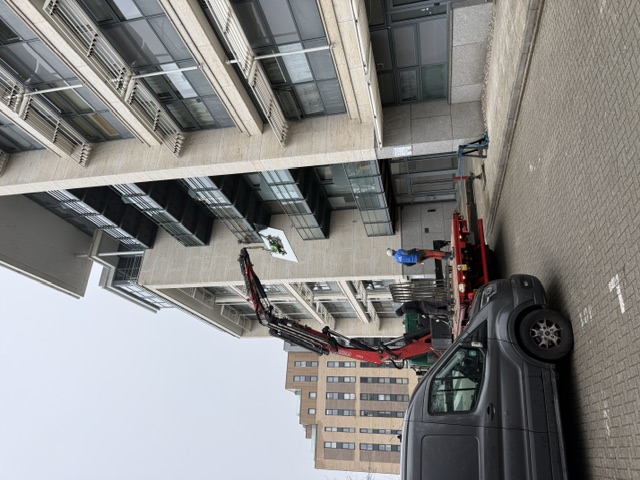
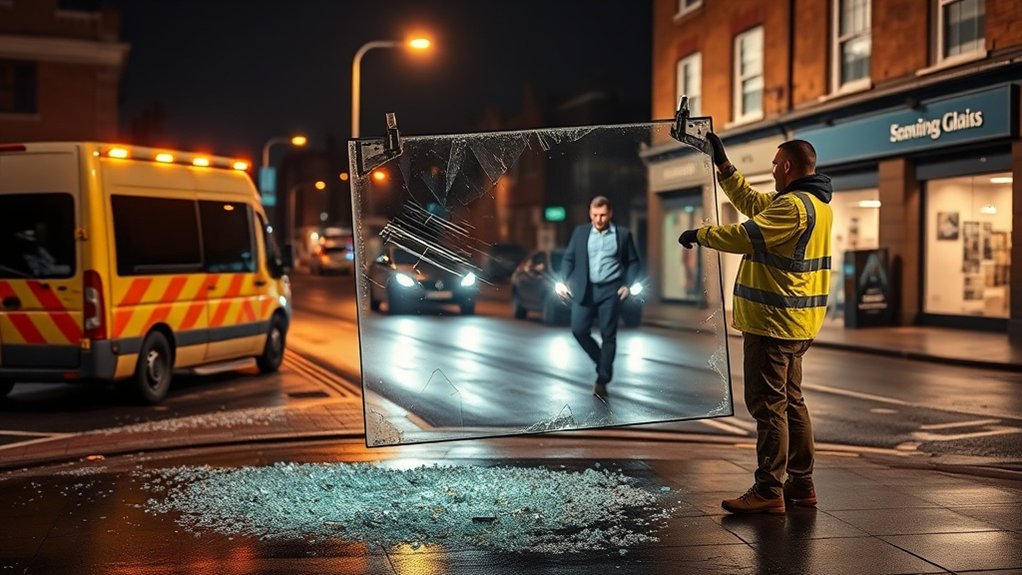
If you’ve got smashed, cracked or insecure glass in Farringdon, you need emergency glazing fast to protect safety, security and weatherproofing. A 24/7 specialist will triage your call, attend typically within 30–90 minutes, make the area safe, remove failed glass and install secure temporary boarding or compliant replacement units. They’ll log measurements, photos and glass specs for a seamless permanent fix. Stay on this page to see how the process, costs and standards work.
Key insights
- 24/7 emergency glazing in Farringdon, with typical response times of 30–90 minutes in central areas and guaranteed windows for outer districts.
- Specialists secure smashed or cracked windows, shopfronts, and doors, isolating hazards and installing temporary or permanent safety glass.
- Services cover modern buildings and sensitive heritage properties, using appropriate glass types: toughened, laminated, fire-rated, and security-grade units.
- Professional glaziers follow Building Regulations (including Parts K and Q), BS/EN safety glass standards, and provide digital documentation and photos.
- Post-emergency, they can assess weaknesses, recommend energy-efficient upgrades, and integrate impact-resistant or anti-intrusion glazing with security systems.
What Counts As an Emergency Glazing Issue?
When a pane is cracked, shattered, loose, or no longer secure enough to protect people or property, it qualifies as an emergency glazing issue that needs rapid attention. You’re dealing with an emergency whenever glass failure compromises structural integrity, security, thermal performance, or weatherproofing.
You should treat any smashed shopfront, forced-entry damage, or cracked load‑bearing unit as urgent. In historical architecture , even a small fracture in original or load-sharing glass can propagate quickly, risking collapse of adjacent frames or masonry. With decorative glass, breakage can expose sharp edges, weaken balustrades or doors, and breach privacy or safeguarding standards.
Any glazing that no longer resists impact, wind load, or safe egress requirements demands immediate, professional intervention.
How 24/7 Emergency Glazing Works in Farringdon
Once glass stops performing safely, you need to know exactly how fast help can reach you and what will happen step‑by‑step. In Farringdon, 24/7 emergency glazing follows a defined technical workflow designed to stabilise your building fast, without compromising long‑term performance.
You contact a specialist control centre that immediately triages risk: location, height, Historical architecture constraints, security exposure, and internal occupancy. A glazier is dispatched with pre‑stocked systems covering multiple glass material types: toughened, laminated, fire‑rated, acoustic, and security‑grade options.
On site, they isolate the hazard, remove failed units, and install temporary or permanent glazing using calibrated fixings, sealants, and impact‑tested boards where needed. Throughout, they document measurements digitally so your final replacement integrates seamlessly with your façade strategy.
Call-Out Times and Coverage Across Farringdon
How quickly a glazier reaches you in Farringdon depends on a structured call‑out model that prioritises risk, not convenience. Your job’s triaged in real time using incident data: occupied buildings, street exposure, and security vulnerability push you into the fastest response band, typically within 30–90 minutes across central, north, south, east, and west Farringdon.
Technicians use GPS‑optimised routing , live traffic feeds, and pre‑packed glazing kits to minimise latency. That applies whether you’re in a tower block, an industrial unit, or a sensitive site with historical glazing or bespoke decorative glass.
Outer districts still sit inside defined service rings with guaranteed maximum response windows, so you know precisely when help arrives, even during peak demand or adverse conditions.
What Happens When the Emergency Glazier Arrives
As the glazier steps on site, they move straight into a structured safety and damage assessment, not casual inspection. You’ll see them secure the impact zone , evaluate load paths around the opening, and identify risks to people, stock, and data systems. They’ll also log details that matter in Farringdon’s mix of historical architecture and high-performance façades.
- Stabilise the environment – isolate the area, remove loose shards, and neutralise immediate hazards.
- Survey the opening – measure to millimetre accuracy, capture photos, and map frame, seal, and fixing conditions.
- Classify the glass – confirm type, thickness, security rating, and any decorative glass or heritage constraints.
- Define the restoration plan – outline precise steps, materials, and timelines so you know exactly what happens next.
Temporary Boarding vs Full Glass Replacement in Farringdon
When your glass fails, you need to decide quickly whether temporary boarding will secure the opening or if a full glass replacement is the correct immediate solution. You’ll weigh structural conditions, security risk, and exposure to weather against cost, safety compliance, and the time required to source and fit new glass. In Farringdon, an emergency glazier helps you choose the fastest safe option now, then plans a precise replacement that matches your budget and performance needs.
When Temporary Boarding Helps
In an emergency glazing situation in Farringdon, you often need to decide fast whether to secure the opening with temporary boarding or go straight to full glass replacement. Temporary boarding helps you stabilise risk, protect assets , and buy time for precise specifications, especially with complex systems.
You’ll typically rely on boarding when:
- You’re protecting decorative glass that needs specialist measurement, templating, or sourcing before safe replacement.
- You’re dealing with historical buildings where listed status demands conservation approval and non-invasive fixing points.
- You need immediate security for high‑value premises while you assess structural movement, frame distortion, or impact damage.
- You’re coordinating advanced upgrades—for example, switching to laminated, acoustic, or smart glass—and need a secure, weather‑tight interim while designs and lead times are confirmed.
Opting For Full Replacement
Temporary boarding stabilises the situation, but full glass replacement restores performance , compliance, and long‑term security. When your glazing fails, you shouldn’t view boarding as a solution; it’s a holding pattern. Full replacement lets you upgrade to modern laminated or toughened units, improve thermal performance, and re-establish acoustic control and security integrity.
In Farringdon’s dense urban environment, you also need glass that meets current British Standards while respecting historical architecture and existing sightlines. Specialist emergency glaziers can survey, specify, and manufacture like‑for‑like or enhanced systems, including high‑performance units behind retained façades. If you use decorative glass, they can replicate patterns, colours, and textures with digital printing or sandblasting, integrating safety interlayers so the new installation looks refined yet performs to contemporary technical expectations.
Cost, Safety And Timing
How do you balance immediate safety , overall cost, and operational downtime after a glazing failure in Farringdon? You need a rapid, engineered decision between temporary boarding and full glass replacement, especially when a Historical building or high‑value Artistic glazing is involved.
- Immediate safety – Boarding stabilises the opening, prevents falling shards, and restores perimeter security within hours, critical on public streets and busy shopfronts.
- Cost control – Boarding’s lower upfront cost buys time to specify glass performance, heritage compliance, and insurance approvals.
- Operational uptime – Smart boarding solutions preserve access, daylight, and branding, reducing business interruption.
- Technical scheduling – Use boarding as a controlled interim phase while surveys, structural checks, and bespoke laminated or heritage-spec units are fabricated and precision-installed.
Emergency Glazing Costs, Insurance and Who Pays in Farringdon
Although shattered glass always feels like an emergency, the cost and who actually pays for emergency glazing in Farringdon follows clear, predictable rules. You’ll typically face three components: call-out fee , temporary securing, and final reglazing. Pricing varies with glass thickness, security rating, and any constraints linked to glass aesthetics or historical preservation requirements.
You should first stabilise the site, then immediately notify your insurer . For most domestic and commercial policies, accidental damage, storm impact, and break‑ins fall under buildings or shopfront cover, so the insurer usually pays minus your excess. If you’re a tenant, the lease normally makes the landlord responsible for structural glazing, while you cover internal fittings. Always request an itemised quote aligned with policy wording to guarantee rapid reimbursement and minimal out‑of‑pocket spend.
Choosing a Reliable Emergency Glazier in Farringdon
When glass fails, you can’t afford guesswork, so you need a Farringdon emergency glazier you can verify quickly and trust under pressure. You’re looking for rapid deployment, precise diagnostics , and clean integration with your property’s design and performance requirements.
- Check technical capability – Confirm 24/7 response, BS/EN-compliant safety glass, and experience with both modern systems and Farringdon’s historical architecture.
- Assess design sensitivity – Ask for examples of projects involving decorative glass features, shopfronts, and complex façades.
- Verify credentials – Look for trade body membership, digital job tracking, and documented installation methods.
- Interrogate response process – Demand clear ETAs, photo-based remote assessment, and transparent digital quotes so decisions are data‑driven, not guesswork.
Safety, Security and Legal Rules for Emergency Glazing
Even under pressure, emergency glazing in Farringdon has to meet strict safety, security and legal standards, not just “make do until Monday.” Your temporary or replacement glass must comply with Building Regulations (especially Part K for impact safety and Part Q for security), use correctly specified safety glass to BS EN standards in critical locations, and maintain an adequate security barrier against forced entry from the moment the glazier leaves.
You’re also responsible for fire-safety performance , load-bearing limits in framed systems, and secure fixing methods that resist prying or levering. On listed or historical architecture, the solution still has to respect conservation rules while protecting people and assets, especially where artistic glass or heritage façades are involved.
Always insist on written compliance documentation and photographic evidence.
Upgrading Your Glazing After an Emergency Call-Out
After the immediate boarding-up and safety checks , you shouldn’t just restore the glass to its previous specification; you should use this incident to assess your long-term glazing performance and risk profile. By reviewing U-values, solar gain, acoustic ratings, and security glass standards, you can select units that better match how you actually use the property. With that data, you can urgently upgrade to energy-efficient glazing that cuts heat loss, stabilises internal temperatures, and reduces future vulnerabilities.
Assessing Long-Term Glazing Needs
Although an emergency glazing call-out restores basic security fast, you should treat it as a short-term fix and immediately evaluate your long-term glazing requirements. Right now, you’ve got a unique chance to redesign performance, aesthetics, and resilience in a single, coherent glazing strategy.
- Audit existing glass – Map every pane: size, thickness, safety rating, and framing. Note failures, impact points, and weak junctions.
- Respect historical architecture – If your property’s listed or characterful, define where you must replicate sightlines, profiles, or decorative glass without compromising integrity.
- Define risk zones – Identify doors, shopfronts, and street-facing panes that demand enhanced impact resistance or anti-intrusion glazing.
- Plan system integration – Consider how new glass will interface with existing frames, security sensors, and access control to avoid future compatibility issues.
Choosing Energy-Efficient Upgrades
Once you’ve mapped your long-term glazing needs, you should prioritise energy performance alongside security and impact resistance. After an emergency call-out, you’ve got a vital window to specify higher-performance units rather than like‑for‑like replacements.
Focus on verified Energy ratings (A to A++) and low U‑values ; these directly correlate with reduced heat loss and lower operational costs. Demand units that combine laminated safety glass with low‑emissivity coatings, warm‑edge spacers, and argon or krypton gas fills.
Ask about Smart materials: electrochromic or thermochromic panes that adapt tint to solar gain, reducing overheating and cooling loads. In Farringdon’s variable climate, this stabilises internal temperatures and protects HVAC efficiency. Insist your installer models payback periods so your upgrade decision’s both rapid and data‑driven.
Frequently Asked Questions
Can Emergency Glazing Help With Noise Reduction or Soundproofing in Farringdon Properties?
Yes, it can, and you shouldn’t delay. With the right glass spec, you gain immediate soundproofing benefits, cutting traffic and street noise fast. You use laminated acoustic glass, optimized air gaps, and advanced seals as core noise reduction techniques. You also upgrade frames to reduce vibration transfer. When you act quickly, you stabilise security, boost acoustic comfort, and future‑proof your property for demanding, high‑performance urban living.
Do Emergency Glaziers Work on Listed Buildings or Conservation Areas in Farringdon?
Yes, you can use emergency glaziers on listed buildings and in conservation areas, but you must act fast, think smart, comply precisely. They’ll stabilise damaged glazing, protect interiors, and propose interim solutions that respect historical preservation and local building regulations. You’ll get rapid boarding , like‑for‑like temporary panes, and technical documentation ready for planners—so you stay safe now while enabling innovative, compliant, longer‑term glazing upgrades later.
Can I Request Specific Glass Types or Finishes During an Emergency Call-Out?
Yes, you can request specific glass types or finishes during an emergency call-out. You state your Glass customization requirements on the call, and the team triages what’s immediately achievable versus what needs a follow‑up visit. They’ll install secure temporary glazing first, then source high‑performance units, coatings, or texture-based Finish options fast. You still get safety and compliance now, while locking in innovative, long-term glass specifications.
Are There Eco-Friendly or Energy-Efficient Glazing Options Available During Emergency Repairs?
Yes, you can choose eco-friendly, energy-efficient glazing during emergency repairs. You specify sustainable materials, you opt for advanced energy saving coatings, you gain immediate thermal performance . Technicians can fit double or triple glazing with low‑emissivity layers, warm‑edge spacers, and argon-filled units on urgent call‑outs. You reduce heat loss now, you prepare for smart‑home integration later, you future‑proof your property while resolving the immediate glazing failure.
Will Emergency Glazing Work Increase My Property’s Value or Appeal to Buyers?
Yes, it can. When you upgrade damaged glass with high-spec units, you immediately enhance property aesthetics and perceived build quality. Buyers read this as reduced future maintenance and better performance, boosting market competitiveness. If you specify low‑emissivity or laminated glass, you’re signalling innovation and resilience. Move fast: documenting the work and warranties lets you present the repair as a targeted value-adding upgrade , not a temporary or reactive fix.
Summary
When glass fails, your home can feel like a circuit suddenly shorted—exposed, vulnerable, and on edge. By acting fast and calling a reliable 24/7 emergency glazier in Farringdon, you’re protecting your safety, security, and compliance with regulations. Don’t wait; secure the opening, document the damage, and confirm who pays. Then use the opportunity to upgrade your glazing so your property’s not just repaired, but better protected for the next impact.